
 Discover the 2026 boats!
Conditions: Flat water, 4 to 7 knots of wind
AxCat 350
Rigid Catamaran Hull and Inflatable DeckDinghies are found aboard all our cruising multihulls. Usually hung from a pair of davits or secured to a submergible aft platform, these boats are essential when anchored, providing a link to land. Dinghies are also used to take mooring lines ashore or set a second anchor, go for a spin, ensure safety on the water, and much more. While we have become accustomed to choosing monohull RIBs, some manufacturers offer rigid-hulled boats, sometimes even catamaran hulls, such as the Tendercat or the Catcha 320 (see reviews in our Special Issue #22). The AXCat we’re looking at here is a bit of a mix of all of these... much to our delight!
Download test

Test location: Erdre River, Brittany, France
Conditions: Flat water, 4 to 7 knots of wind
Since 2018, BirdyFish has been making a name for itself as an innovative manufacturer that wants to make foiling accessible to everyone... and then in 2023, the company’s founders, led by Jean-Baptiste Morin, discussed with Alexandre Seux, co-founder of Temo (manufacturer of electric outboards), and naval architect Pierre Delion, a project for a tender that truly met the needs of boaters. ‘‘At first, we tested a 100% rigid dinghy,” explains Jean-Baptiste. “Pierre had thought of a catamaran hull, which is more stable and performs better. It was a bit heavy and there was the problem of contact with the mother boat. So we opted for a rigid carbon hull and inflatable tubes for the deck.”
So it was hull #1 that I discovered on the magnificent Erdre River, north of Nantes. Jean-Baptiste launched his AXCat on his own from the nearest boat ramp - his dinghy weighs 210 lbs (95 kg). That may sound like quite a lot, but when you consider the size and freeboard of the “beast,” it’s not that heavy compared to a Highfield Classic 340, which weighs in at 156 lbs (71 kg). The hard-bottomed hull is characterized by very narrow bows with a chine and a hull section that expands toward the rear. The volume of the hull is therefore much greater than the simple double bottom of a classic RIB – it’s more like a rigid dinghy topped with inflatable tubes... On the water, the AXCat handles loads very well – both that of the motor and that of the crew on board.
We began the test with a regular 15 HP outboard. At low speeds, the handling is pleasant - you can cross large wakes without fear of taking on water, as the
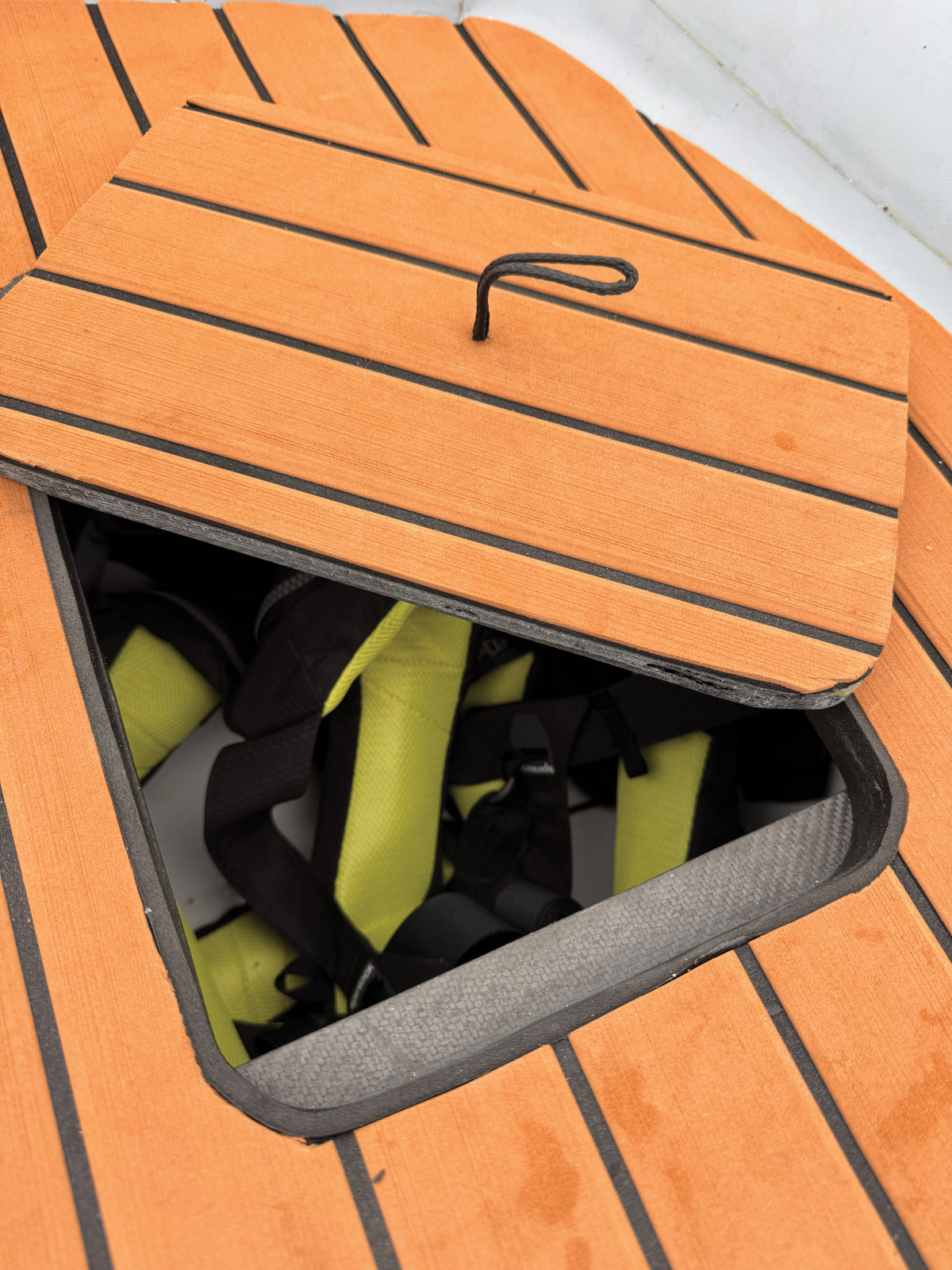
18-inch (45 cm) tubes effectively raise the freeboard. We really liked the incredible stability of this tender – it’s like a pontoon! We also applaud the comfortable seating and the softness of the added cockpit lining. It should be noted that the cockpit is self-draining. There’s plenty of storage space and fabric bags. Four anchor points are provided for hoisting the tender on the davits. The fuel tank and battery are stowed in the bow - a messenger line is supplied for connecting the fuel pipe and cables under the floor. At full throttle with three people on board, the AXCat 350 can reach 16 knots, but as it planes very flat due to its large aft volume, it requires a long-shaft motor. In tight turns, the engine tends to cause heel on the inside of the turn... but not the catamaran hull, which prefers to take a little edge and bite on the outside. Sharp turns are therefore felt a little harshly by the crew, but a high-speed slalom exercise is not at all part of the AXCat’s program.
The tender has been optimized for the forthcoming 3 kW outboard from Temo. For now, we were content with the tried and tested Temo 1000, which allowed us to cruise up and down silently and emissions-free for about 90 minutes.
Once you get over the surprise of this hybrid design, the AXCat 350 is a high-end tender that is perfectly suited to a multihull. The combination of the imposing rigid structure and inflatable tubes combines genuine seaworthiness, impeccable comfort, and unfailing “utility” efficiency - protection against chop, cushioning of contact with the mothership multihull. All these qualities mean that the AXCat can also be used solo for fishing, going ashore, etc. Only the high price tag might deter potential buyers - even though the carbon construction and choice of high-end materials justify the asking price.
![]()
![]()
Builder: BirdyFish
Material: Carbon/Elium resin (recyclable) and Hypalon tubes
Length: 11’6” (3.5 m)
Beam: 5’11” (1.8 m)
Weight: 210 lbs (95 kg)
Capacity: 6/7 people
Motor: 6 kW/15 HP
Price: € 19,990 ex-tax, not including motor
www.axcat.fr/en
![The AXCat features a very comfortable deck covering. Note the numerous storage spaces (lockers and fabric storage compartments) and the sturdy anchoring points.]()
![]()
![The bows are very narrow and <br/>topped with a chine.]()
![With the Temo 1000, it can cruise at 5 knots for around 90 minutes. The tender has been optimized for a three times more powerful electric motor that will soon be on the market.]()
Add several tests to your cart
and get an extra discount!
Conditions: Flat water, 4 to 7 knots of wind
So it was hull #1 that I discovered on the magnificent Erdre River, north of Nantes. Jean-Baptiste launched his AXCat on his own from the nearest boat ramp - his dinghy weighs 210 lbs (95 kg). That may sound like quite a lot, but when you consider the size and freeboard of the “beast,” it’s not that heavy compared to a Highfield Classic 340, which weighs in at 156 lbs (71 kg). The hard-bottomed hull is characterized by very narrow bows with a chine and a hull section that expands toward the rear. The volume of the hull is therefore much greater than the simple double bottom of a classic RIB – it’s more like a rigid dinghy topped with inflatable tubes... On the water, the AXCat handles loads very well – both that of the motor and that of the crew on board.
Internal Combustion Engine or Electric Motor
18-inch (45 cm) tubes effectively raise the freeboard. We really liked the incredible stability of this tender – it’s like a pontoon! We also applaud the comfortable seating and the softness of the added cockpit lining. It should be noted that the cockpit is self-draining. There’s plenty of storage space and fabric bags. Four anchor points are provided for hoisting the tender on the davits. The fuel tank and battery are stowed in the bow - a messenger line is supplied for connecting the fuel pipe and cables under the floor. At full throttle with three people on board, the AXCat 350 can reach 16 knots, but as it planes very flat due to its large aft volume, it requires a long-shaft motor. In tight turns, the engine tends to cause heel on the inside of the turn... but not the catamaran hull, which prefers to take a little edge and bite on the outside. Sharp turns are therefore felt a little harshly by the crew, but a high-speed slalom exercise is not at all part of the AXCat’s program.
The tender has been optimized for the forthcoming 3 kW outboard from Temo. For now, we were content with the tried and tested Temo 1000, which allowed us to cruise up and down silently and emissions-free for about 90 minutes.
Conclusion
Founder
Jean-Baptiste Morin is one of the three founders of BirdyFish. He’s the one responsible for the development and marketing of the AXCat 350 - and future models in the range.

Naval Architect
Pierre Delion is a naval architect based in Nantes, France. His designs include the Explocat 52.

Technical Specifications
Material: Carbon/Elium resin (recyclable) and Hypalon tubes
Length: 11’6” (3.5 m)
Beam: 5’11” (1.8 m)
Weight: 210 lbs (95 kg)
Capacity: 6/7 people
Motor: 6 kW/15 HP
Price: € 19,990 ex-tax, not including motor
www.axcat.fr/en
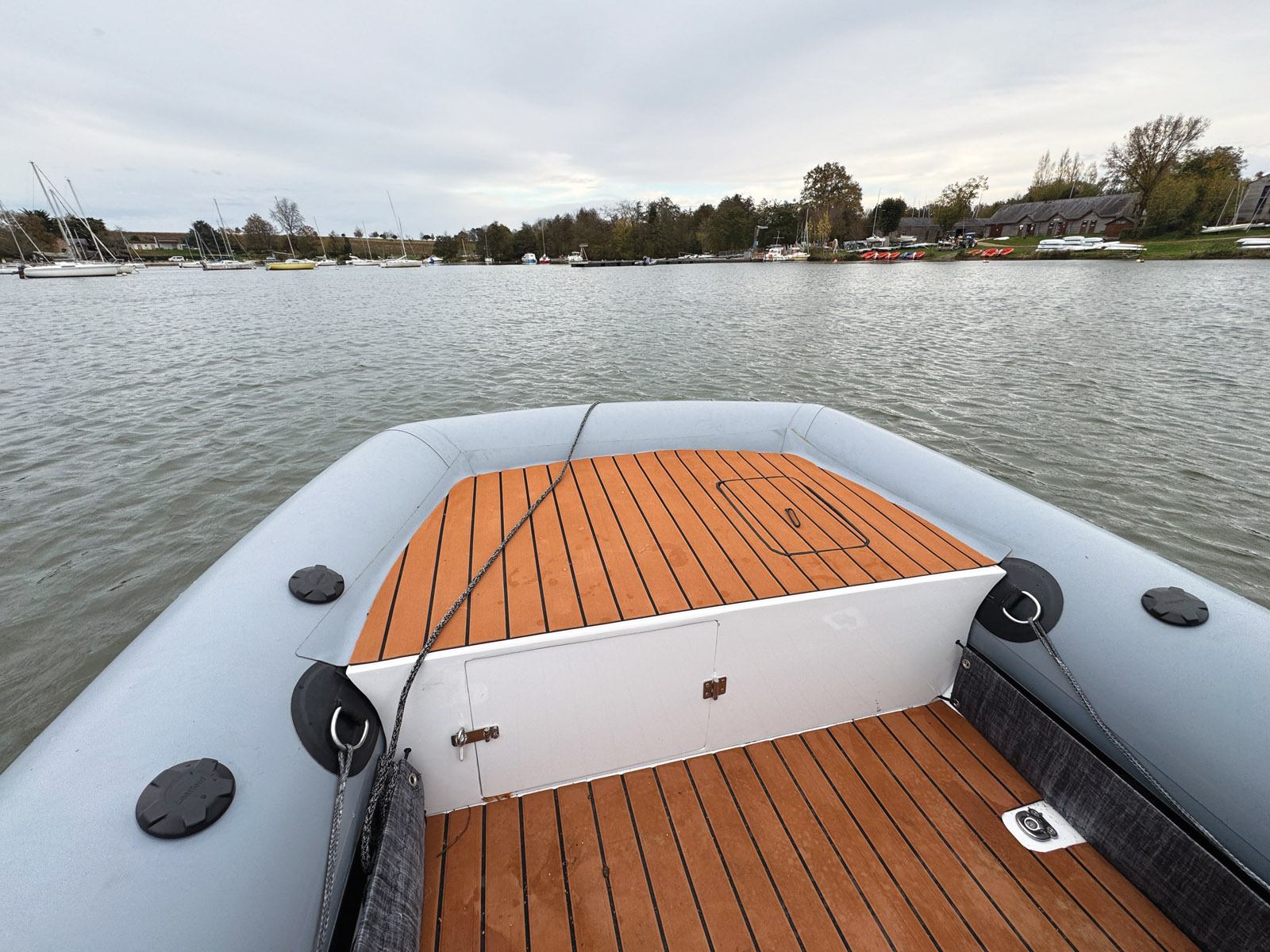
The AXCat features a very comfortable deck covering. Note the numerous storage spaces (lockers and fabric storage compartments) and the sturdy anchoring points.
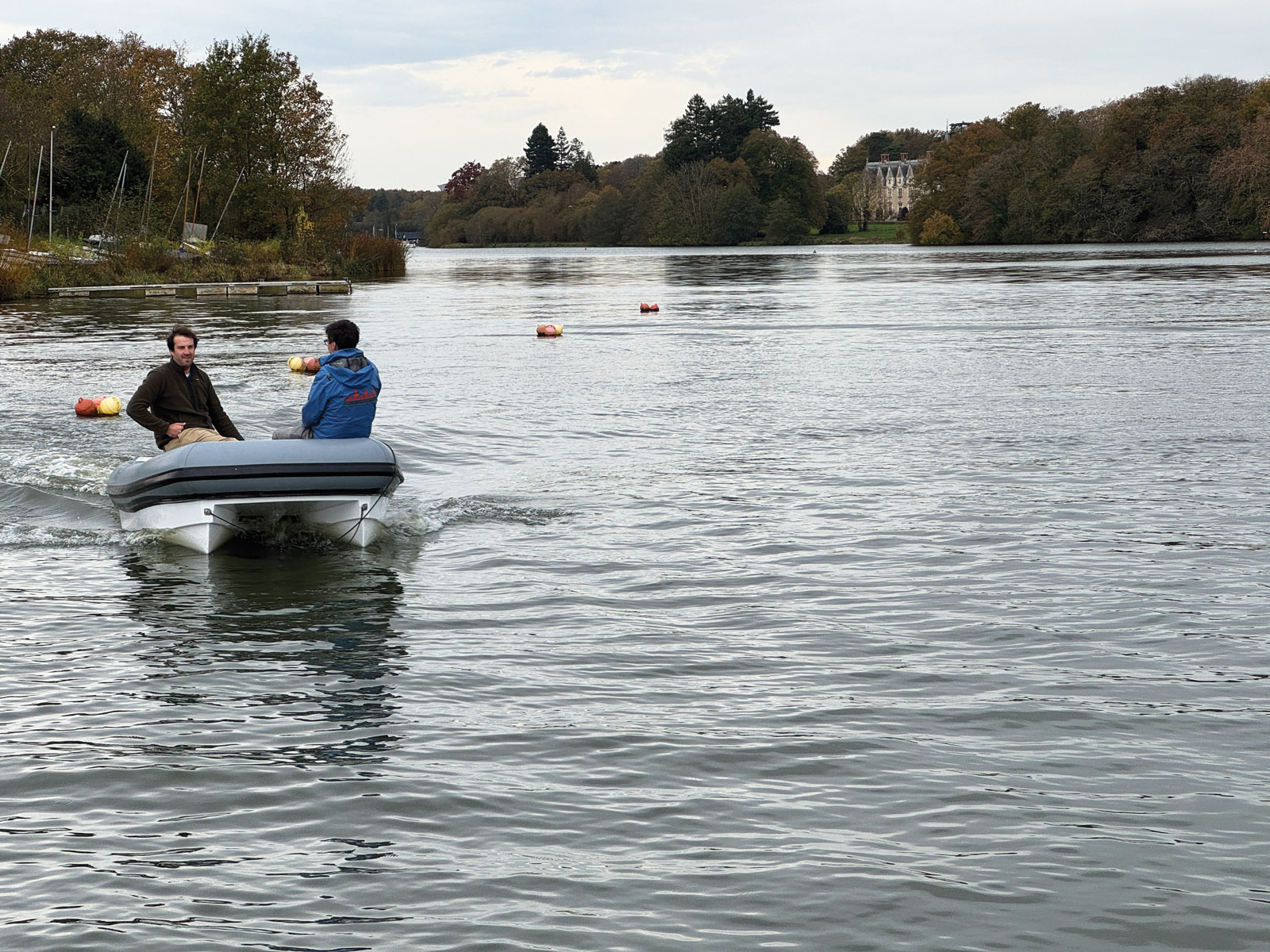
The bows are very narrow and
topped with a chine.
topped with a chine.
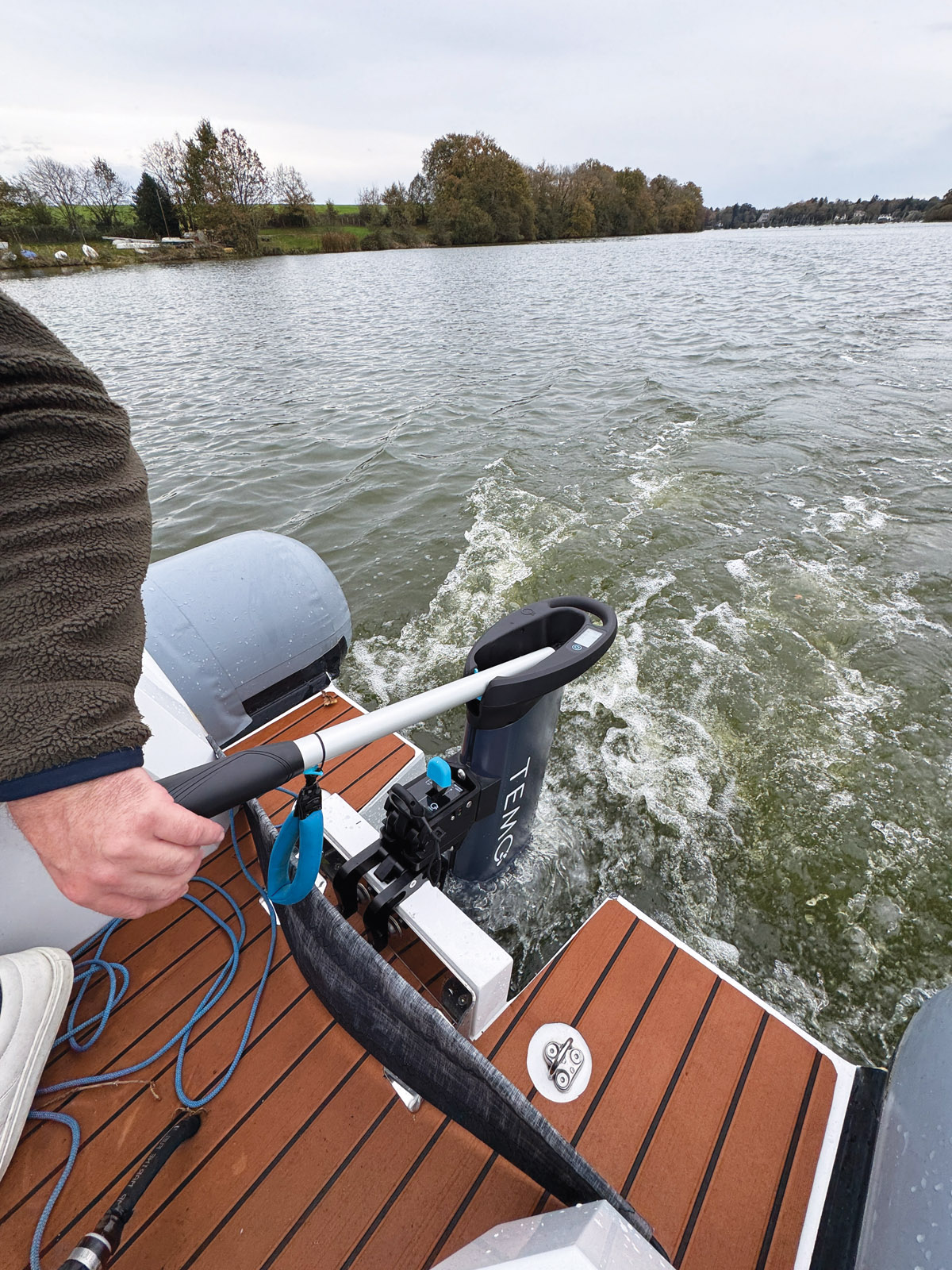
With the Temo 1000, it can cruise at 5 knots for around 90 minutes. The tender has been optimized for a three times more powerful electric motor that will soon be on the market.


For all used-boats for sale
Classified ads
View classified ads
Lagoon 560, owner version, excellent condition, ready to go arround the World.
- Location :
- Mackay, Australia
- Year :
- 2013
What readers think
Post a comment
No comments to show.