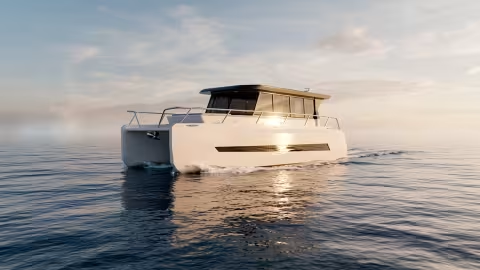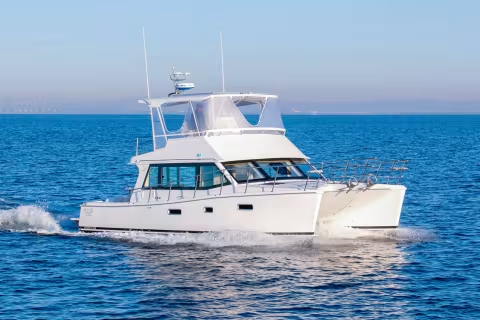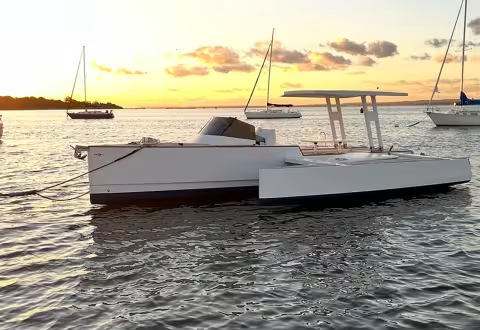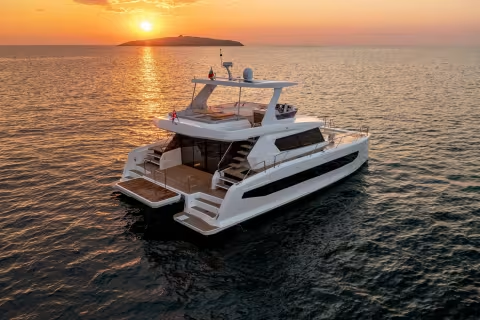

After many years aboard a 23-foot (7 m) monohull, he wanted a boat capable of heading farther offshore in search of sea bass, pollock or bluefin tuna, while maintaining high transit speeds when sea conditions deteriorate.
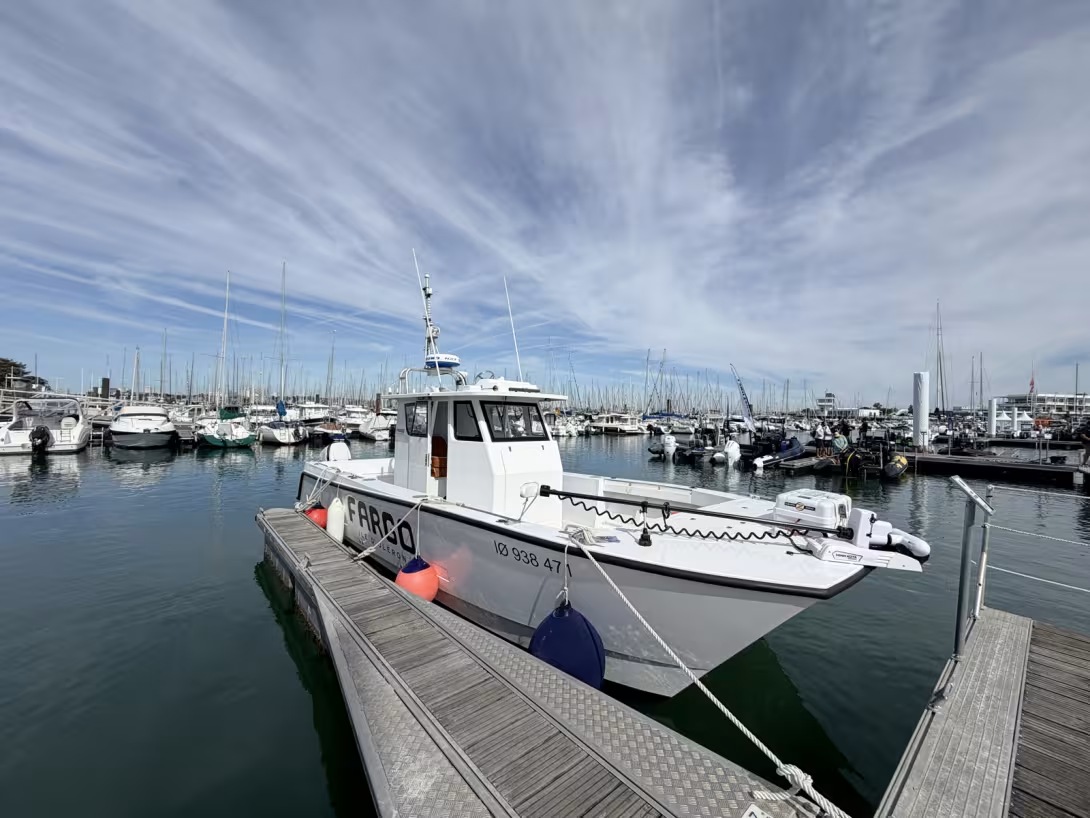
The choice of a catamaran therefore quickly became obvious. With its slender hulls and relatively narrow tunnel, the Fargo 31 was developed to limit slamming and, according to its designer, maintain speeds of around 25 to 30 knots in conditions where a monohull would have to slow down considerably. Power remains reasonable, with twin 250 hp Suzuki V6s and a claimed top speed of 40 knots.
But it’s when walking around the deck that the Fargo’s professional origins really become apparent. There are large freeing ports worthy of a trawler, doors in the bulwarks generous enough to bring catches aboard, and no fewer than four insulated 14.1 cu ft (400 l) fish boxes. On this first professional boat, the gasoline tanks are also installed in the bulwarks to comply with regulations requiring fuel to be kept on deck.
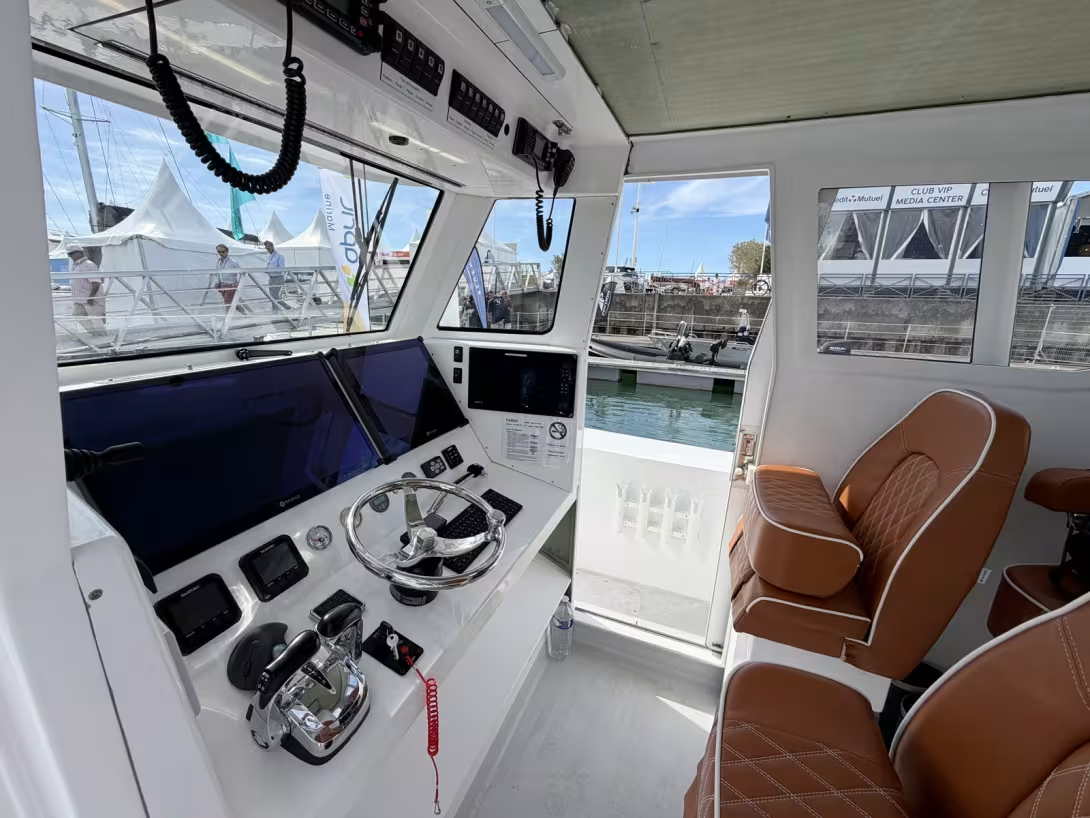
Yet this fishing vocation hasn’t prevented a particularly high standard of finish. The upholstery, quality of the infusion and layout of the helm station contrast with the sometimes very basic image of a working boat. The helm seats with backrests feature folding seat bases, allowing a more comfortable position during long passages out to the fishing grounds.
Builder Pescavel is already considering developing the concept into a version aimed more at recreational boaters.
Technical Specifications
Builder: Pescavel
Construction: Infused fiberglass/vinylester
Hull Length: 30'7" (9.33 m)
Length Overall with Engines: 33'3" (10.13 m)
Beam: 11'1" (3.39 m)
Light Displacement: 4.5 t
Powertrain: 2 × 250 hp Suzuki V6
Cruising Speed: 27/28 knots
Max Speed: 40 knots
Fuel: 2 × 79 US gal (300 l)
Water: 16 US gal (60 l)