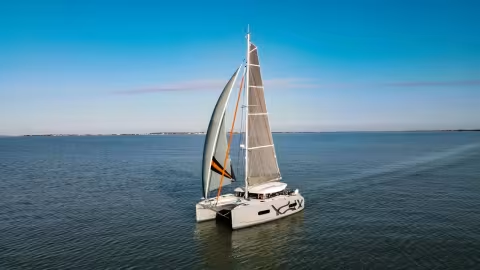
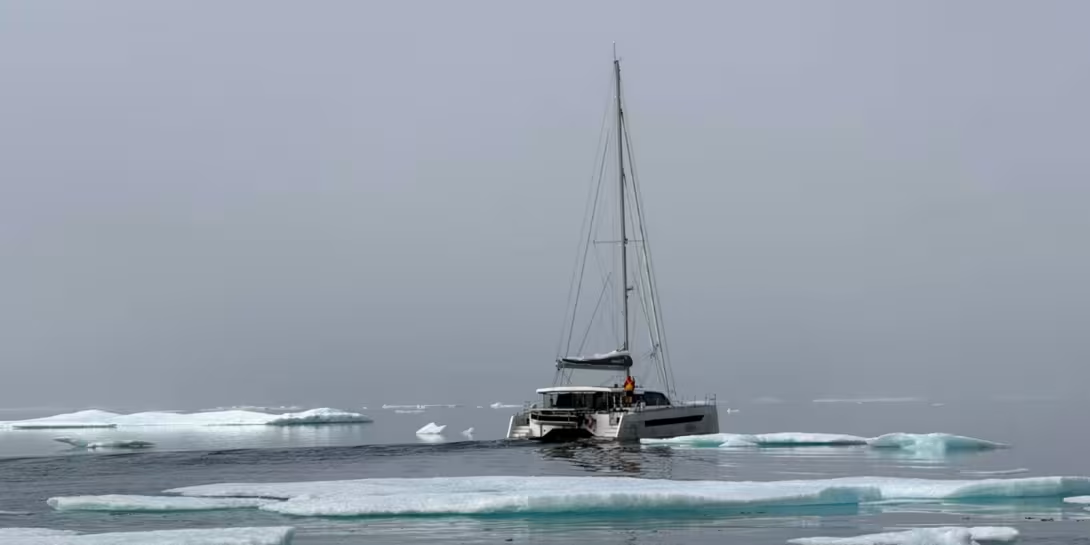
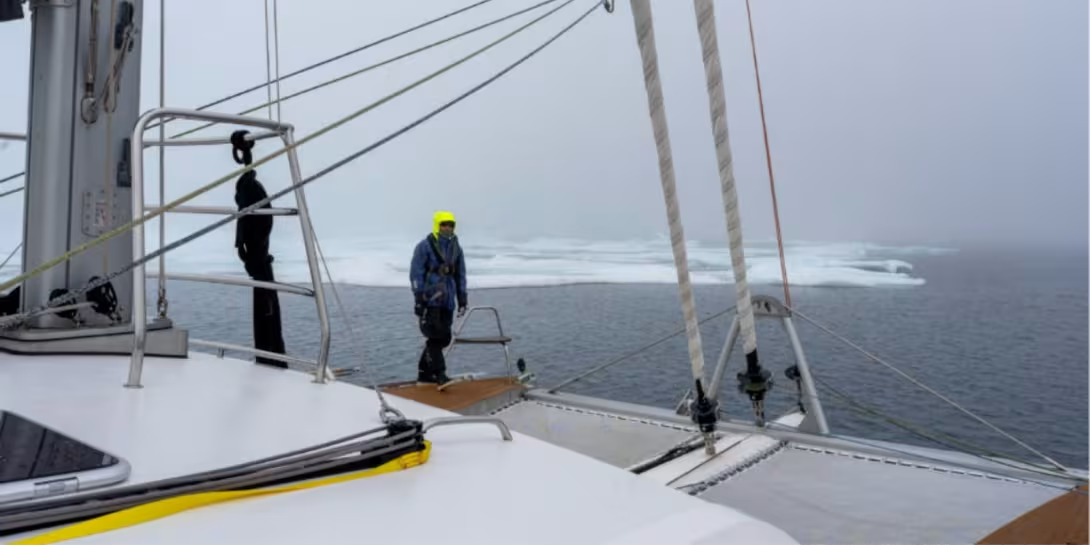

Before departure, the crew carefully prepared their multihull for this challenging passage: checking and adapting equipment, taking on provisions and filling the water and fuel tanks. No less than 383 US gal (1,450 l) of diesel were taken aboard in Nuuk. Hafiz then headed north along Greenland’s west coast to Upernavik, encountering serious ice for the first time in Disko Bay. Approaching Ilulissat, the concentration of ice even forced the crew to lower the sails and continue under power while maintaining a constant watch.
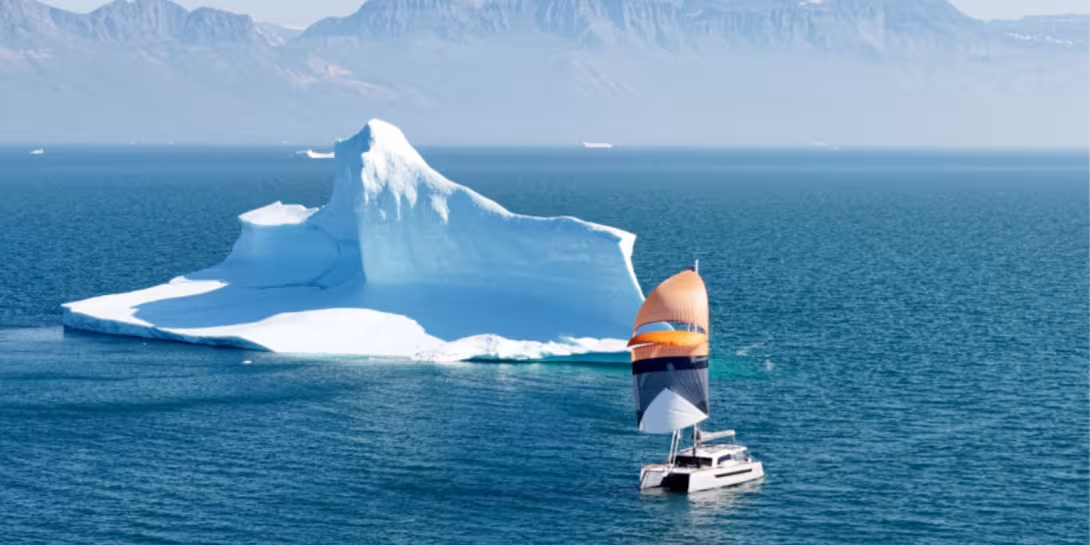
After covering 880 nautical miles in 15 days to Upernavik, only 150 of them under sail due to particularly light winds, Hafiz crossed Baffin Bay toward Canada. This time, southerly winds allowed the catamaran to make progress under mainsail and gennaker at 6 to 10 knots. The four crewmembers took turns standing three-hour solo watches, using radar and maintaining a constant visual lookout when fog made detecting icebergs more difficult.
The route continued through the Canadian Arctic Archipelago via Lancaster Sound, Bellot Strait and Cambridge Bay. Ice conditions required the itinerary to be regularly reassessed before continuing toward Alaska. On September 9, after 4,203 nautical miles, Hafiz finally entered Nome, completing an east-to-west Northwest Passage in just under two months.
Founded in 1974 and based in Cherbourg-en-Cotentin, Garcia Yachts specializes in aluminum bluewater cruising and exploration sailboats. The first multihull offered by the builder, the Explocat 52 was launched in 2020. Its aluminum platform, watertight bulkheads, protected helm station and substantial carrying capacity were specifically designed for this type of offshore and high-latitude sailing.