Issue #: 208
Published: August / September 2026
- Price per issue - digital : 6.50€Digital magazine
- Price per issue - print : 9.50€Print magazine
- Price with subscription : from 2.91€Subscribe
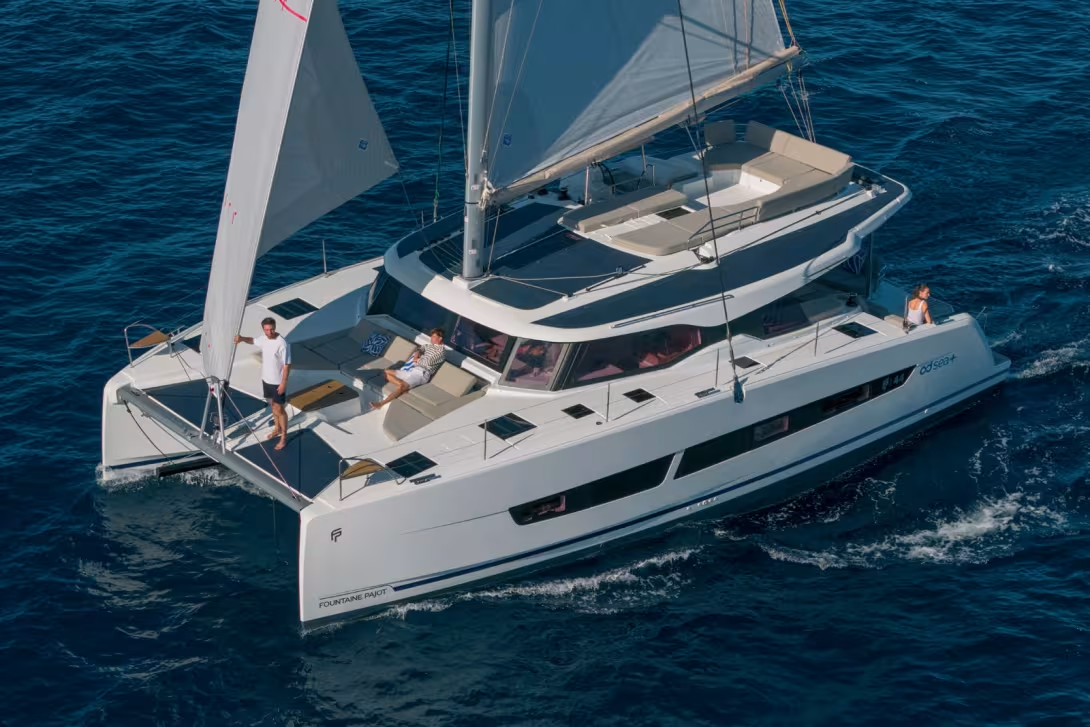
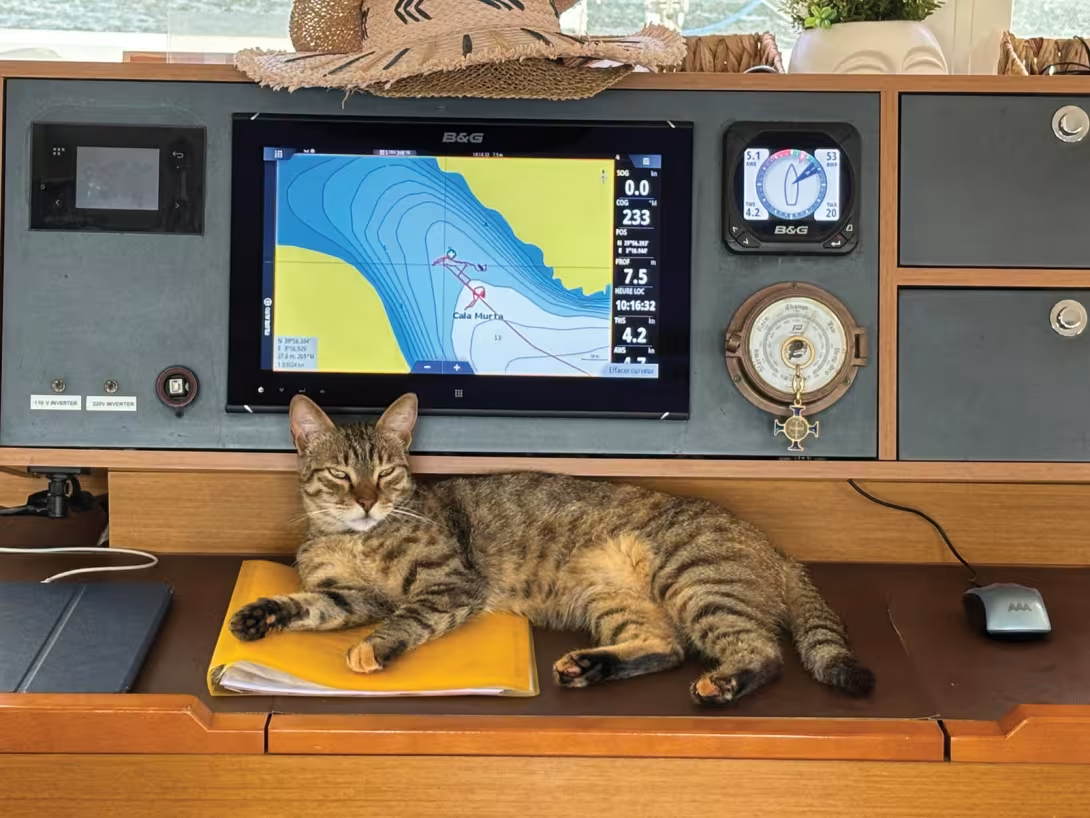
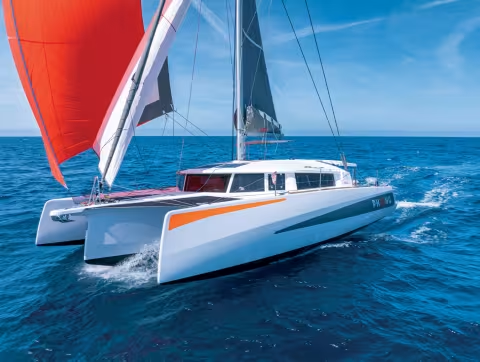
Laura and her family set sail aboard their Bali 4.2 accompanied by their dog, Bandit, for 2,500 miles. Needless to say, our contributor knows what interests us here: pets on board. But to round out her experience, Laura didn’t hesitate to question other boaters too: Canadian, French, Puerto Rican or Swiss - seasoned sailors or newbies - cruising the Mediterranean or around the world, and they’ve never crossed paths. Still, these adventurers have at least two things in common: they’re sailing with their pets on board their boats, and they agreed to share a few tips with readers of Multihulls World.
The catamaran glides slowly across a mirror-calm sea. The sun is dropping and getting closer to the horizon; the air stays warm, and on deck everything could almost seem peaceful. Almost. Except for Bandit. Once again, my golden retriever is waiting. For hours, he’s pacing in circles, hesitating, refusing to settle. At sea, dogs often do this: they hold it in. Long enough - too long… And each time, the same question comes back - lightly awkward, but impossible to dodge: are we really doing the right thing by bringing our animals with us?
Sailing with your pet is a dream many share. You picture sunsets, a dog by your side, a cat curled up in the cockpit, familiar company amid the immensity. But as often at sea, reality is a bit more… technical. In fact, the first thing you discover once you’ve cast off (and sometimes at our own cost) is that not all animals are made for life at sea. A boat, even a larger multihull that doesn’t heel, is not a home you can “live in.” It’s a space in motion, noisy, sometimes unstable, often constrained - and above all, for a length of time that doesn’t match being on land. For an animal, that changes everything. Weather and conditions also play an important role. A dog used to moderate temperatures can quickly suffer from the heat. Available space matters too: a big, energetic dog on a modest-size boat is a bit like locking a marathon runner in an elevator. The noise? A cat used to quiet could be frightened as soon as the engines start. Against these physical constraints comes the ability to adapt. Or not. Some animals seem to be born to discover new environments and adjust. Others… much less so.
Windy, Véro and Patrice’s dog, for example, came aboard at three months old. Meaning she grew up with the roll, the maneuvers, the smell of the sea. Today, she’s completely at ease. A real “sea dog.” By contrast, Bandit - our golden retriever - has never really accepted some of the “rules of the game,” since he has sometimes gone up to 35 hours without doing his business. Obviously, during passages, that situation created problems (for our dog and for us, his owners). Sometimes we couldn’t reach an anchorage quickly, or even get ashore with the dinghy. We therefore come to the big topic nobody talks about (but everyone lives with): going to the toilet on board. It’s probably the least glamorous part of this article, but also one of the most important.
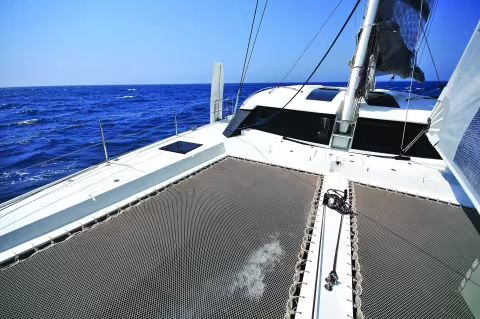
Yvan and Fabian opted for a pragmatic solution: a fake-grass mat installed on the trampolines. “Winston and Elton are a bit sad, they point out - there’s nothing to sniff… but at least we don’t have to take them out when the boat’s moving.” Véro, meanwhile, chose a more gradual approach: a mat, then stones, then nothing; Windy got the kind of training you’d expect from a behavioral coach! As for Chimène and Chris’s cats, everything seems easier. A biodegradable litter tray, and it’s sorted. But ...
What readers think
Post a comment
No comments to show.