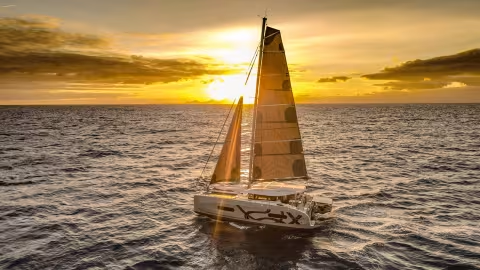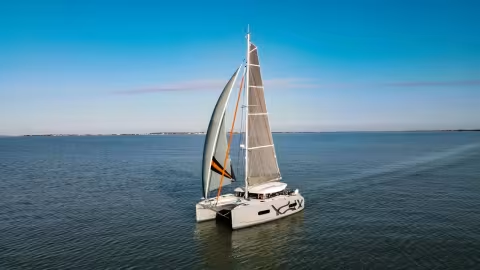
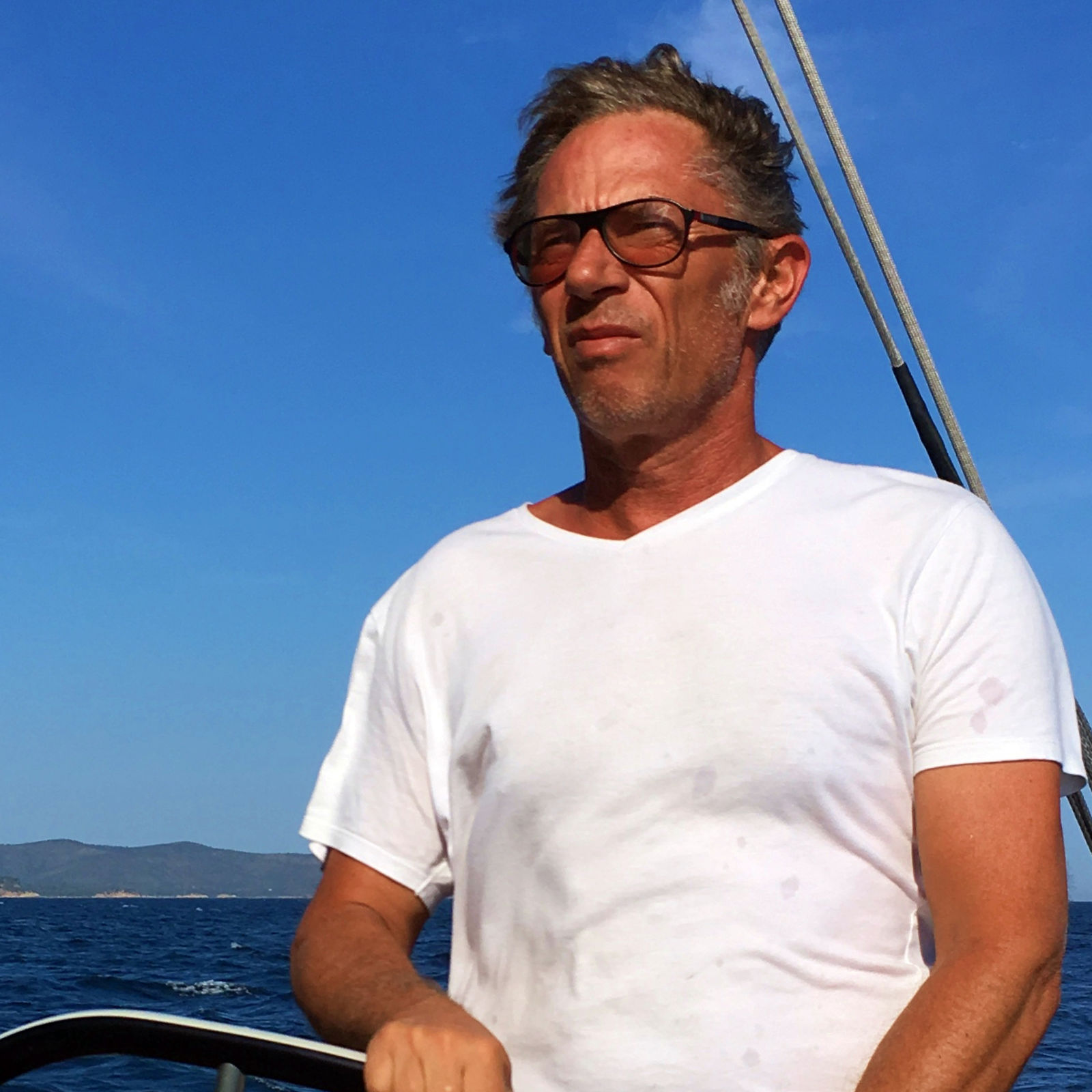
“It's a beautiful, long swell, really, really pleasant. Coming right from behind, perfectly aligned, allowing me to sail along comfortably under spinnaker.” But today, Éric is especially keen to introduce us to his most faithful crewmate. Not a flesh-and-blood companion, of course, since he's crossing the Atlantic solo, but an essential piece of equipment: the autopilot.
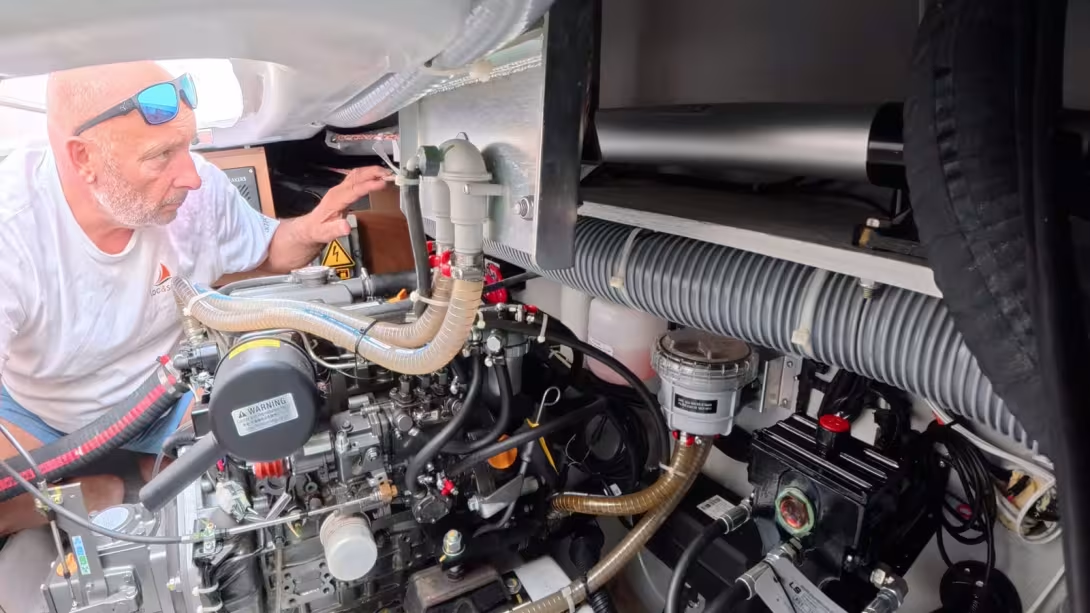
Camera in hand, the skipper heads down into the depths of his catamaran to show us the autopilot, its drive ram and linkages. It's a visit he makes regularly, even when everything appears to be working perfectly.
“It's true that it's not exactly the most glamorous footage, but I regularly go down to check on it, make sure everything's okay and that it's not showing any signs of weakness.” And with good reason: aboard Skiboo 2, the autopilot does most of the steering. “Without it, this adventure would be completely different. I'd have to steer all the time! It handles the helm 90 to 98% of the time. I really only take over during maneuvers.”
The autopilot gives Éric time to rest, prepare meals and take care of the countless tasks involved in life aboard. However, the skipper regularly takes the helm himself in light airs, when he needs to make the most of every puff of wind and fine-tune his course. After all, Éric has set himself one strict rule: to cross the Atlantic without ever using his engines to propel the catamaran. “On long passages, when the wind drops, most people usually start their engines. But I don't use mine for propulsion. I run them occasionally when I need to generate electricity, but since leaving, I've done absolutely no motoring!”
This self-imposed restriction makes the autopilot even more valuable. Éric also emphasizes the importance of proper maintenance. His own system was serviced just before departure, after a weakness was detected during an intensive training session. “A word of advice for anyone setting off on a long voyage: get your autopilot serviced before you leave. It certainly makes life a lot easier!” And once at sea, it's better to inspect the installation regularly than wait for the first signs of trouble.
Meanwhile, all is well aboard Skiboo 2. At position 30°10.13' N / 017°46.54' W, the catamaran is making 7.3 knots in 10.2 knots of true wind, on a course over ground of 218°.
The long Atlantic swell has finally arrived, the orange spinnaker is flying, and the autopilot is holding course. Next stop: the trade winds, with a crewmate who never sleeps!