Issue #: 209
Published: October / October 2026
- Price per issue - digital : 6.50€Digital magazine
- Price per issue - print : 9.50€Print magazine
- Price with subscription : from 2.91€Subscribe
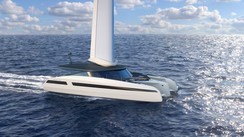
Long associated with the pursuit of performance and speed, boating is now evolving towards a more contemplative approach. Known as “slow boating” or “slow yachting,” this trend is directly inspired by slow tourism: cruising shorter distances at lower speeds, spending more time at each stop, discovering the areas along the way and reducing energy consumption.
While the phenomenon is particularly noticeable in coastal cruising, it is also gaining ground on inland waterways, where houseboats, cruising catamarans and small electric craft are attracting people looking for autonomy and simplicity. The Cannes Yachting Festival has even chosen to make it one of the themes of its 2026 edition.
This evolution reflects genuine expectations among boaters. According to a study conducted by the Fédération des Industries Nautiques in 2023, 72% of the sailors surveyed said they wanted to slow down their cruising pace, 65% wanted to reduce fuel consumption and 58% expressed frustration with predetermined itineraries. More broadly, the desire for more relaxed tourism is also evident ashore: an international Booking.com survey of more than 27,000 travelers across 33 countries found that 67% wanted to discover less crowded destinations and enjoy more immersive experiences.
For multihulls, this evolution comes as no surprise. Thanks to their shallow draft, natural stability and extensive surface area available for solar panels, they are probably among the platforms best suited to this new way of traveling. More than simply a means of transportation, the boat becomes a genuine living space, where time spent at anchor, exploring ashore and simply enjoying life on board is just as important as the cruising itself.
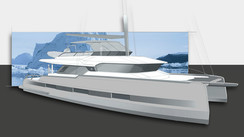
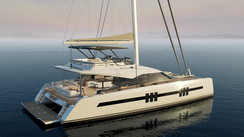
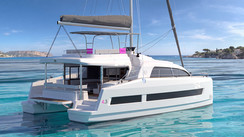
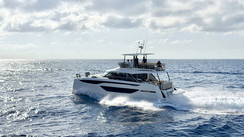
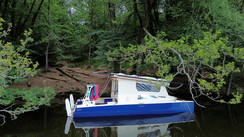
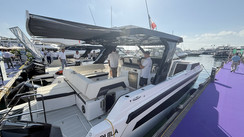
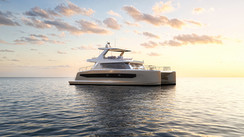
This philosophy is now inspiring a wide variety of projects. The HopYacht 30, Millikan M10, Lakai 32KS and Loopia 290 Family favor electric propulsion combined with particularly efficient hulls to provide quiet, energy-efficient cruising. The Neuland37, like the Kroland II, brings the compact displacement powercat back into the spotlight, designed to cover long distances at moderate speeds with reduced fuel consumption. The E-40 Earthling, Elight 44 and Rapido 500 Eco Power Cat take the concept of energy autonomy even further thanks to significant onboard electricity generation. At the other end of the scale, projects such as the Van Cat 25 and Wildkat 6.10 demonstrate that slow boating can also be enjoyed aboard trailerable multihulls inspired by vanlife, capable of exploring both coastlines and inland waterways. When wide enough, these waterways are also perfectly suited to sailing catamarans… with their masts removed.
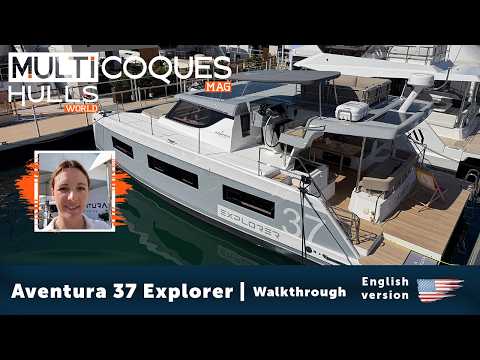
This evolution is also bringing renewed attention to certain multipowers that appeared long before the market was ready for them. Launched in 2010, the Lagoon 40 MY already offered a radically different approach from the sporty powercats then in vogue. With displacement hulls derived from the sailing Lagoon 39, a maximum speed limited to 11 knots and particularly low fuel consumption, it prioritized range, comfort, coastal cruising and understated design. The concept was far from achieving the commercial success hoped for, but fifteen years later, at a time when energy efficiency and quality of life on board have become major considerations, it now appears almost visionary - and the same philosophy can be seen today in the Aventura 37 and 45 Explorer.
This shift is also prompting new thinking about infrastructure. Around the world, marinas, charter bases and inland waterway authorities are now developing itineraries that favor shorter legs and the discovery of local areas rather than long passages under power. This evolution goes hand in hand with the arrival of new generations of boats designed more for living aboard than for breaking speed records.
More than just a passing trend, slow boating therefore appears to reflect a profound change in recreational boating worldwide. And our multihulls seem more than ever to be the natural ambassadors of this new way of traveling on the water, whether through tropical lagoons, along temperate coastlines or across extensive inland waterway networks.
What readers think
Post a comment
No comments to show.